
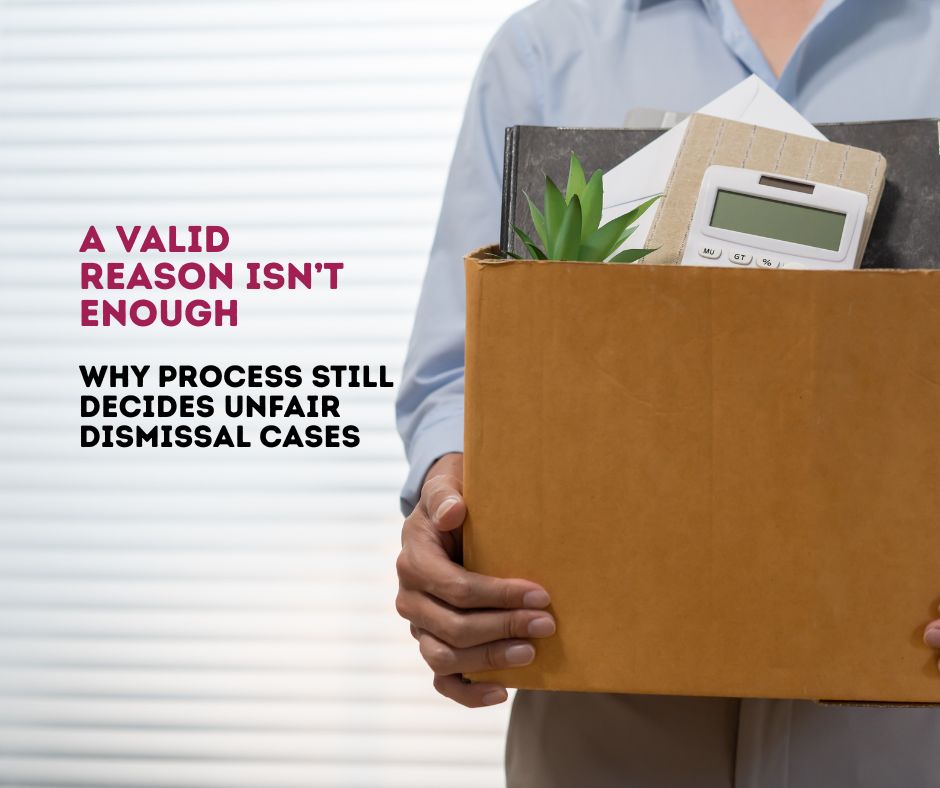
A valid reason isn’t enough
Why process still decides unfair dismissal cases
Two Fair Work Commission decisions reported this month send the same message to employers: having a good reason to dismiss someone does not protect you if the way you do it is unfair.
Case 1: The trader who worked from Singapore
A Sydney currency trader at Xe was due back from annual leave in November 2025, but logged in from a hotel in Singapore instead. He had previously asked to work from Singapore for a year and been refused. The company traced his work laptop to the hotel and dismissed him in early December 2025 for breaching policy and a breakdown of trust.
The Commission found his concealment was deliberate and dishonest, and that the employer had a valid reason. But it still found the dismissal unfair, because the company did not follow a fair process before dismissing him.
He received no compensation, because he had already been paid four weeks in lieu of notice. The employer was fortunate. In many cases, a flawed process with a valid reason still results in a compensation order and legal costs.
Case 2: Sacked by abusive text
In a Queensland case decided on 9 October 2026, a truck detailing business told a long-serving employee by text that she was “no longer welcome”, effective immediately, in an exchange the Commission described as abusive and threatening.
There was no conduct or performance reason, no warning and no chance to respond. The business then ignored the Commission for almost a year, so the case was decided on the employee’s evidence alone. The dismissal was found to be harsh, unjust and unreasonable, and being a small business carried little weight.
The lesson
The Commission looks at both the reason and the process. Even when an employee has clearly done the wrong thing, you must still give them a fair hearing before deciding. And if a claim is made, you must engage with the Commission.
A fair process checklist for employers
Before dismissing an employee for conduct or performance:
- Investigate first. Gather the facts and evidence before reaching any conclusion.
- Put the allegations in writing. Be specific about what is alleged, when and where, and share the evidence you are relying on.
- Give a genuine opportunity to respond. Allow reasonable time, and consider the response properly.
- Offer a support person for any meeting, and do not unreasonably refuse one.
- Consider warnings and history. For performance issues, has the employee been warned and given a chance to improve?
- Weigh mitigating factors, such as length of service, personal circumstances and any explanation given.
- Decide, then communicate in person or in writing, respectfully. Never by abusive text.
- Document everything, from the first concern to the final decision.
- Small business? Follow the Small Business Fair Dismissal Code and keep a record that you did.
- Respond to the Commission promptly if a claim is lodged, even if you dispute it.
A note on AI and the Commission
From 20 October 2026, parties in individual matters such as unfair dismissal claims must disclose any use of AI in their documents and confirm their accuracy. Whether you are responding to a claim or preparing one, check AI-assisted material carefully before it is filed.
How Explore Potential can help
Explore Potential supports South Australian employers through every step of a disciplinary or dismissal process, from investigations and allegation letters to show cause and outcome letters. A fair process protects your business and treats your people with respect. Get in touch before you act, not after a claim lands.
This article is general information only and is not legal advice.