
The Employment Relationship Coming to an End – How to Be a Good Leaver
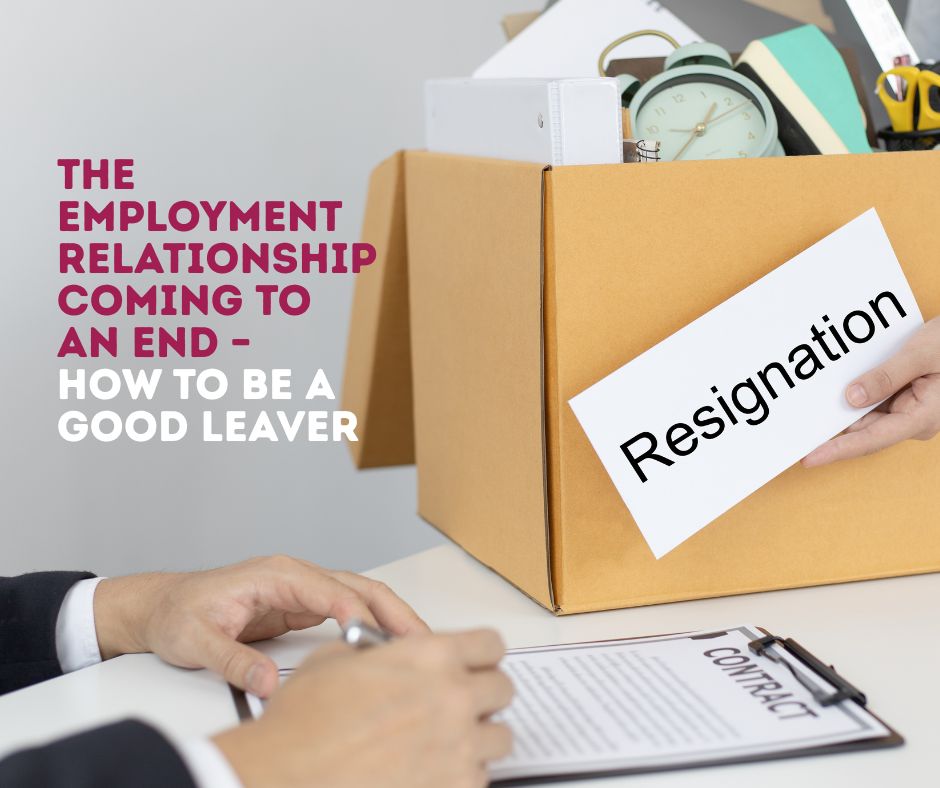
No employment relationship lasts forever.
Whether someone resigns for a new opportunity, retires, changes careers, relocates, or the organisation decides to move in a different direction, endings are a natural part of working life. While conversations about employment ending can often feel uncomfortable, how people leave an organisation matters — sometimes just as much as how they joined.
Being a “good leaver” is about professionalism, maturity, and recognising that reputations follow people long after their final day of work.
Employment Relationships Are Human Relationships
At its core, employment is a relationship built on trust, communication, expectations, and shared experiences. Over time, people invest not only their skills, but also their energy, ideas, emotions, and identity into their workplace.
When employment ends, there can be mixed emotions:
- excitement,
- disappointment,
- relief,
- uncertainty,
- frustration,
- gratitude,
- sadness,
- or even resentment.
These emotions are normal. However, how people manage themselves during this period can significantly impact future opportunities, professional relationships, and personal wellbeing.
What Does It Mean to Be a Good Leaver?
Being a good leaver does not mean pretending everything was perfect.
It means leaving with professionalism, integrity, and respect — even if the circumstances were challenging.
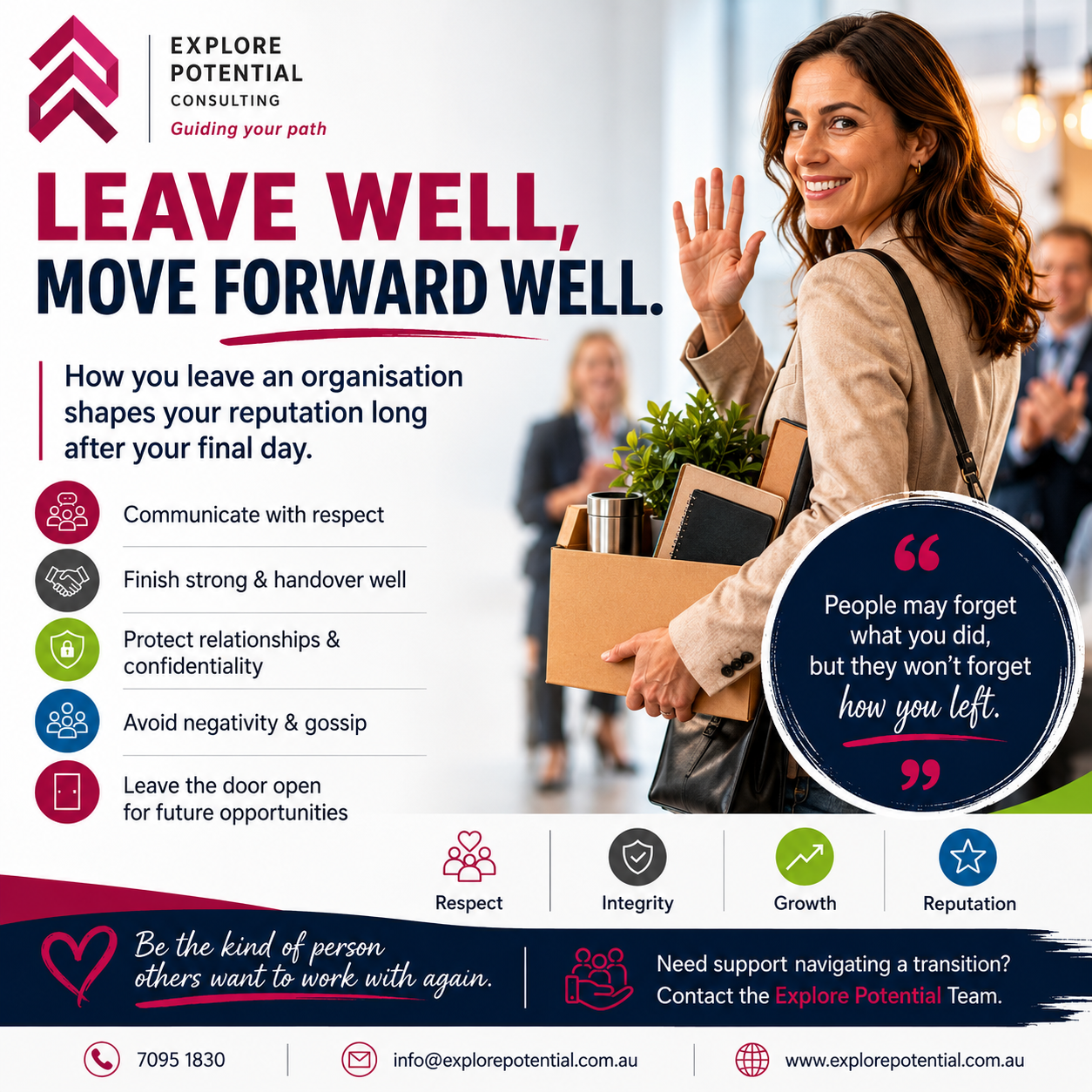
A good leaver:
- communicates openly and respectfully;
- works through notice periods professionally;
- avoids gossip or negativity;
- supports handovers and transitions;
- protects confidential information;
- acknowledges positive experiences;
- maintains professional relationships;
- leaves the door open for future opportunities.
In many industries and communities, professional networks are smaller than people realise. The way someone exits an organisation can shape how they are remembered for years to come.
Resignation Does Not Need to Be Personal
When employees resign, employers can sometimes feel disappointed, frustrated, or even blindsided. Equally, employees may feel nervous about delivering the news.
But resignations are a normal part of workforce movement.
People leave jobs for many reasons:
- career progression,
- salary,
- flexibility,
- leadership,
- wellbeing,
- family commitments,
- alignment of values,
- burnout,
- or simply wanting change.
Resigning professionally and respectfully allows everyone to move forward constructively.
When the Employer Ends the Relationship
Not all employment endings are initiated by the employee.
Sometimes organisations need to make difficult decisions relating to:
- performance,
- conduct,
- restructuring,
- operational change,
- cultural fit,
- client requirements,
- or financial sustainability.
Even when employment ends involuntarily, professionalism remains important on both sides.
Employers should:
- communicate respectfully;
- follow fair and lawful processes;
- provide dignity during difficult conversations;
- avoid humiliation or unnecessary escalation.
Employees, while understandably emotional, benefit from remaining composed and respectful wherever possible.
A difficult ending handled professionally often protects future references, networks, and opportunities.
The Importance of Professional Handover
One of the clearest signs of a good leaver is the effort placed into handover and transition.
This includes:
- documenting key tasks;
- updating records;
- briefing replacement staff;
- communicating clearly;
- finalising outstanding work where possible.
Strong handovers demonstrate accountability and professionalism. They also show respect for colleagues who remain.
Avoid the Exit Spiral
Sometimes employees mentally “check out” once they decide to leave. Productivity drops, negativity increases, and workplace relationships deteriorate.
This can quickly damage an otherwise strong reputation.
The final few weeks of employment are often what colleagues remember most clearly.
Remaining engaged, respectful, and cooperative until the end reflects maturity and emotional intelligence.
Social Media and Workplace Reputation
In today’s world, emotional reactions can quickly become public.
Posting negative comments online, criticising former employers, sharing confidential information, or engaging in workplace gossip can significantly damage professional credibility.
Even when frustrations are valid, public venting rarely creates positive outcomes.
A good rule is:
If you would not say it in a professional meeting, do not post it online.
If you would not say it in a professional meeting, do not post it online.
Employers Also Need to Be Good “Leavers”
Employment endings are not just a test for employees. Organisations also have a responsibility to handle departures well.
Good organisations:
- conduct respectful exit processes;
- communicate clearly;
- acknowledge contributions;
- pay entitlements correctly and on time;
- maintain confidentiality;
- avoid unnecessary hostility;
- seek feedback constructively.
How organisations treat departing employees shapes culture, morale, and employer reputation.
Sometimes Leaving Is the Right Thing
- Not every employment relationship is meant to last forever.
- Sometimes people outgrow roles.
- Sometimes workplaces evolve.
- Sometimes values no longer align.
- Sometimes people simply need a new chapter.
- Leaving is not failure.
- Handled professionally, endings can become important stepping stones toward growth, opportunity, and healthier workplaces.
Transition Support Matters
Employment transitions can feel overwhelming for both employees and employers. There are often practical, emotional, operational, and compliance considerations that need to be managed carefully.
Seeking support during periods of workplace transition can help:
- maintain professionalism;
- reduce conflict;
- support employee wellbeing;
- manage risk appropriately;
- protect workplace relationships;
- ensure lawful and respectful processes are followed.
Whether navigating resignation, restructuring, performance concerns, workplace conflict, or broader organisational change, early support and guidance can make a significant difference.
If your organisation or team requires support managing employment transitions, workplace culture, investigations, leadership conversations, or people-related matters, the Explore Potential team is available to assist.
Explore Potential
Final Thoughts
People often remember:
- how they were treated,
- how they treated others,
- and how things ended.
Being a good leaver is about preserving dignity, professionalism, and relationships — even during challenging transitions.
Because careers are long, industries are connected, and reputations matter.
The goal is not simply to leave a job.
It is to leave well.